Unexpected Connection: What Strangers Can Teach Us About Community
June 5, 2026
Have you ever found yourself unexpectedly energised after a conversation with someone you’ve only just met?
Unexpected Connection
Normally I like quiet weekends – pottering around the garden, spending time with family, being in nature, watching the kids play sport, visiting the markets, cooking a delicious meal or two, and working on Connection Compass.
But last weekend was action-filled – more like the weekends I spent in my twenties, before having children. It was fill. ed with friends, parties, outings, and socialising.
Honestly, it’s now Wednesday, and my cup is still completely full.
There was quality one-on-one time, delectable food, world-class art, intimate venues, a rowdy rooftop bar, an outdoor farmers’ market, dancing at an inclusive club, mingling at a suburban bar, and giggling on the public bus. Time was spent with girlfriends that feel like sisters, dear friends, acquaintances, and complete strangers.
Despite all these varied experiences and people, one thing was consistent: a sense of connectedness.
What surprised me most was some of the moments that made my heart sing weren’t with close friends, but with strangers.
I’ve noticed this before. When I have an opportunity to talk deeply with someone I’ve never met before, there is often a sense of aliveness. A feeling of togetherness. Perhaps even love – not in the romantic sense, but an empathetic kind of love that comes from recognising our shared humanity.
Strangers and Shared Humanity
On Sunday, I pushed myself slightly beyond my comfort zone and started a conversation with a mum at soccer – someone I hadn’t spoken with before. We ended up chatting for the entire match about a range of topics – work, parenting, politics, and food. The conversation flowed naturally.
Later that afternoon, my family attended a friend’s 50th birthday drinks. Apart from the hosts, we didn’t really know anyone. As my husband retreated to recharge his social battery, I decided to lean into the opportunity. I spoke with our friend’s brother and parents, university friends, and people whose children had once carpooled together.
What struck me most was how warm the goodbyes felt.
We had only just met, yet we exchanged hugs and handshakes. The farewells were heartfelt. There was a genuine sense that we hoped to cross paths again – perhaps at our friend’s 60th birthday.
It really got me thinking.
I place a high value on social connection and intentionally create opportunities each week to spend time with kindred spirits – through work, my children’s networks, community singing and laughter yoga.
But perhaps I underestimated the value of connecting with strangers.
We don’t always have opportunities for meaningful conversations with new people, although I try. I am conscious to make eye contact with shop attendants whenever I can and make sure my “How’s your day been?” is genuine rather than automatic.
What Happens When We Talk to Strangers?
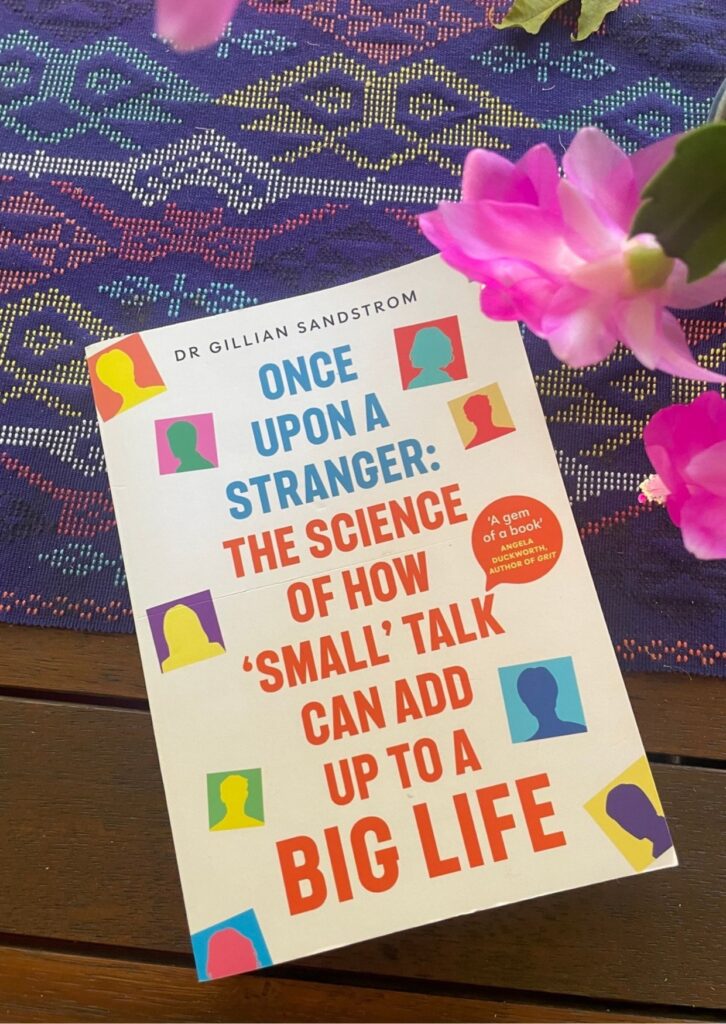
At the moment, I’m reading Once Upon a Stranger: The Science of How ‘Small’ Talk Can Add Up To A Big Life by Dr Gillian Sandstrom. I’m only at the beginning, so I don’t yet have all the science or answers. But one of the things Sandstrom explores is how chatting with strangers can boost mood and leave people feeling more connected. Humans are naturally curious, and strangers often respond more positively than we expect.
These interactions also invite us to get more comfortable with uncomfortable feelings: we practice tolerating uncertainty, navigating the possibility of rejection, and loosening our concerns about social judgement.
Perhaps that’s the gift about talking with strangers. There is uncertainty. We don’t know how we’ll be received. We don’t know whether the conversation will go anywhere.
Shared Humanity in Unexpected Places
Yet these brief interactions can remind us that most people are carrying stories, worries, hopes, and joys that look remarkably similar to our own.
In many ways, strangers provide a gentle training ground. Because they play little role in our ongoing lives, they offer a low-stakes opportunity to develop skills that serve us in the relationships and situations that matter most.
Talking with strangers can also help us become more present. More curious. More open to the possibility that other people are interesting, kind, and carrying stories we know nothing about. In this way, it can help make the world a little kinder.
After a weekend full of different forms of social interaction, I feel buoyed. I also know that if every weekend looked like that, I would probably feel drained and exhausted.
Community as a Reference Point
This weekend reminded me that Community can take many forms.
Sometimes it’s the people who know us best. Sometimes it’s the friends we’ve laughed with for fourteen years. And other times it’s the person sitting beside us at a soccer field, on a bus, or across a table.
As with all the reference points on the Connection Compass, the invitation is not to seek more connection for connection’s sake. It’s to notice what is needed. And then respond accordingly.
To notice when we’re feeling isolated, disconnected, or pulled too far into our own world. And perhaps to remember that connection can sometimes be found in the most unexpected places.
Reflection
If you’ve been feeling isolated, disconnected, or caught in your own thoughts, perhaps the Community reference point is worth exploring.
That might look like spending time with old friends. Joining a group. Calling someone you trust. Or simply being a little more open to the people already crossing your path.
If you’re looking for increased social connection or a greater sense of community, it can be helpful to pause and ask:
When was the last time you struck up a conversation with someone you didn’t know?
How often do you move through your day open to connection?
Are there opportunities for small moments of connection that you’ve been overlooking?
Cherie Pasion
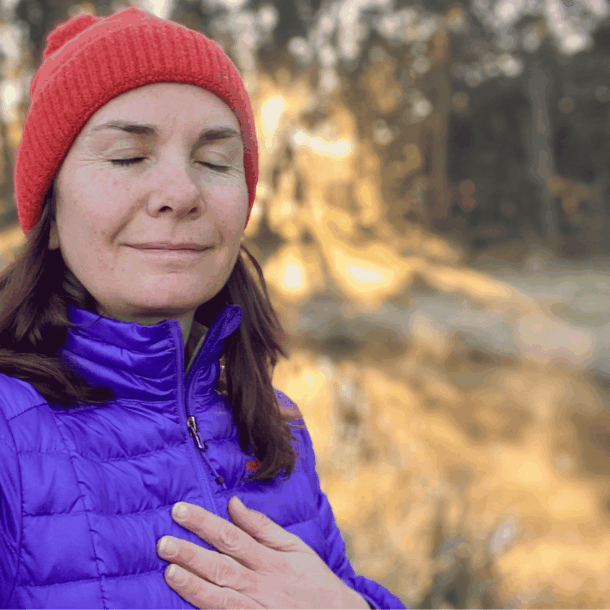
Cherie Pasion is the founder of Connection Compass, a framework that helps people re-orient when life feels off and respond with clarity and steadiness. Her work draws on lived experience, behavioural science, systems thinking, and nature-based practice. Cherie has led award-winning behaviour change programs supporting thousands of people across Australia and is an internationally published author.