The Power of Self-Compassion: Being a Friend to Yourself
September 11, 2025
Picture this. Your friend is having a bad day and is really beating herself up about a situation. Maybe she made a mistake at work, snapped at her kids, or forgot something important. She’s going down the self-criticism rabbit hole. If you were sitting beside her, you’d offer a kind word, right? You’d reassure her that she’s human, that we all make mistakes, and that one rough moment doesn’t define her worth. Compassion would come naturally, because you care for her.
Now picture this. Think back to the last time you had a bad day. Perhaps you were feeling behind on the goal you’re working towards, or you said or did something you regret. How did you respond to yourself? Did you meet yourself with the same kindness – or did something else take over? For example, did you get swept up in self-judgment, telling yourself that you weren’t good enough, that you “should have known better,” or that you had failed?
For most of us, the answer is the latter and this is where things begin to drift.
We extend understanding outward, yet turn inward with pressure, judegment or harsh expectations. Not always loudly, but enough to feel the drift. And often we don’t even notice it happening.
A quiet drift away from yourself
This gap isn’t a personal failure, it’s a pattern many people live with. Over time, we can become conditioned to believe that being hard on ourselves keeps us responsible, capable, or in control. That if we soften, we might slip.
But in practice, something else tends to happen. The more critical the internal voice becomes, the harder it is to think clearly, respond proportionately, or trust our own signals. We become reactive, tight, or withdrawn – rather than steady.
It’s not an indication that something is wrong with us, but a sign that we’ve drifted away from a more supportive internal reference. Self-compassion, in this sense, isn’t something to add. It’s something to return to.
What is Self-Compassion?
At its simplest, self-compassion is a way of relating to yourself that restores steadiness.
Psychologist Kristin Neff, a leading researcher on self-compassion, describes self-compassion as having three key elements:
Self-kindness – Being gentle and understanding with yourself instead of critical.
Common humanity – Remembering that struggles and mistakes are part of the shared human experience, not personal failings.
Mindfulness – Noticing your difficult thoughts and emotions without becoming entangled in them.
Self-compassion isn’t a technique to “get right” – but a means to stay in relationship with yourself when things feel off.
Why Do We Struggle to Show Ourselves Compassion?
Many of us grew up believing that being hard on ourselves would motivate us to do better. We fear that kindness equals complacency or weakness, or that letting ourselves “off the hook” means we won’t grow. But research shows the opposite: self-compassion actually fuels motivation, resilience, taking personal responsibility, and boosting wellbeing.
Think about it. If your inner voice is constantly critical, you’re more likely to feel anxious, drained, and stuck. On the other hand, when your inner voice is supportive, you create a sense of safety that allows you to take risks, learn from mistakes, and keep moving forward.
When these three elements come together, they create a powerful antidote to shame, perfectionism, and burnout.
How to Practice Self-Compassion as a Moment to Re-Orient
When you notice self-criticism starting to take hold, there’s nothing to need to “fix” in that moment.
But you might pause, just to see where you are.
Notice What’s happening right now? Notice the tone of your inner voice. Notice the pressure in your chest, your thoughts, your body.
Experience You might stay with that for a moment. Or gently reconnect – perhaps placing a hand on your heart, or taking a slower breath. This isn’t necessarily to change anything, but just to be with what’s here.
(Settle, if needed) If things feel heightened, you might give your body a moment to settle. Take sip of water. Focus on your breathing for a moment or two – perhaps allowing your exhale linger twice as long as your inbreath. Let your shoulders and jaw relax. Maybe even take a step outside to feel your feet on the ground or the sun on your body.
Reflect Ask yourself: What am I believing right now? Is this thought helping me find my footing – or pulling me further away? You might also remember: this is not just happening to you. Others have stood in this place too.
Respond From here, something small may shift. A sentence may soften, or the urgency of the situation may ease. You may find a different perspective becomes available.
The Ripple Effect of Self-Compassion
Over time, these moments matter. Maybe not in a dramatic way, but you may notice a shift in how you move through everyday situations.
You may notice:
less spiralling when things go wrong
clearer, more proportionate responses
a quieter, more supportive internal dialogue.
And often, this extends outwards. You become more patient, empathetic, and grounded. You model for your family, colleagues, and friends what it looks like to be both strong and kind.
Most importantly, self-compassion reconnects you with your own humanity. It helps you remember that you are worthy of the same love and care you give so freely to others.
Returning, again and again
Self-compassion isn’t something you master or maintain perfectly (humans don’t work that way.)
It’s something to return to – especially in the moments when it feels least available. And over time, that returning becomes familiar.
You begin to recognise when you’ve drifted. And more importantly, you begin to trust that you can find your way back.
A Gentle Place to Return To
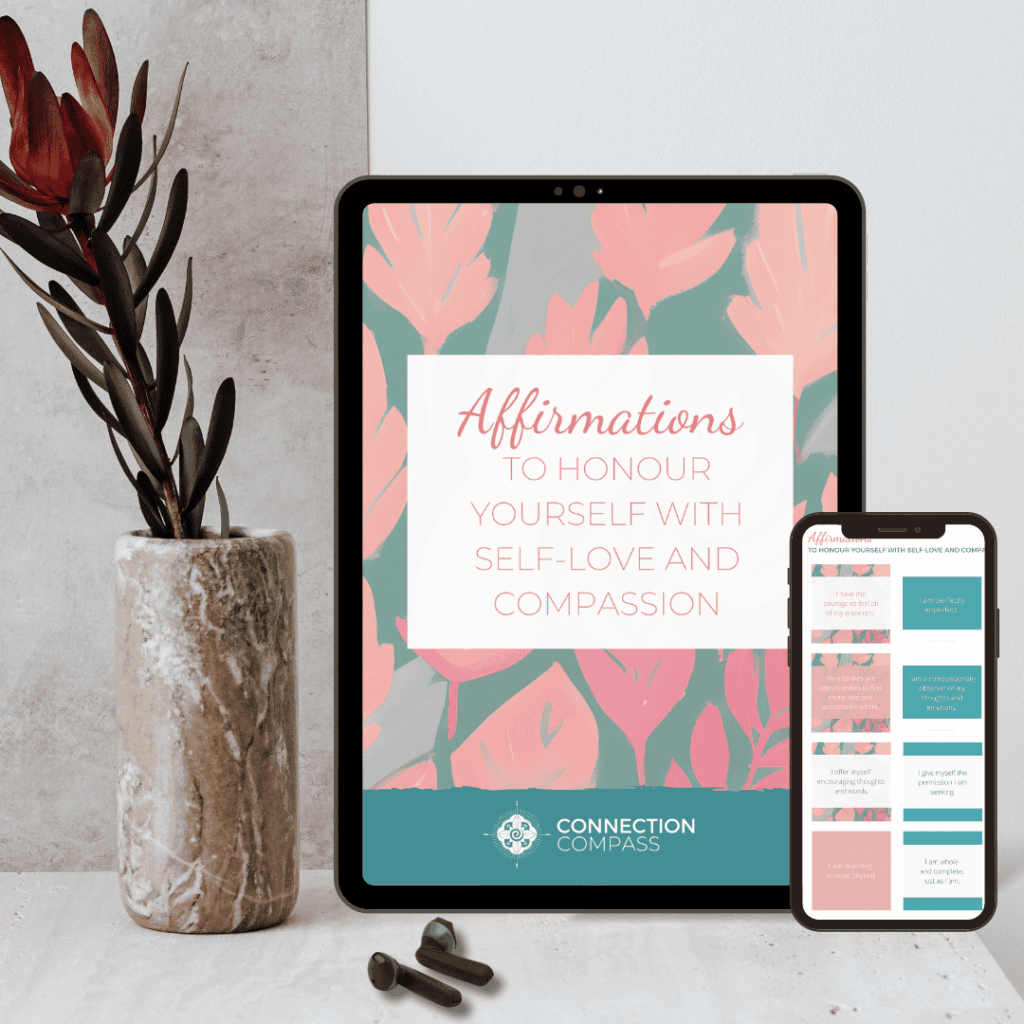
If you’d like a simple way to stay connected to this, the Connection Compass Soul Reminder Series offers short, supportive prompts you can return to when things feel off.
Think of them as small, steady check-ins – something to come back to, rather than keep up with.
Cherie Pasion is the founder of Connection Compass, a framework that helps people re-orient when life feels off and respond with clarity and steadiness. Her work draws on lived experience, behavioural science, systems thinking, and nature-based practice. Cherie has led award-winning behaviour change programs supporting thousands of people across Australia and is an internationally published author.