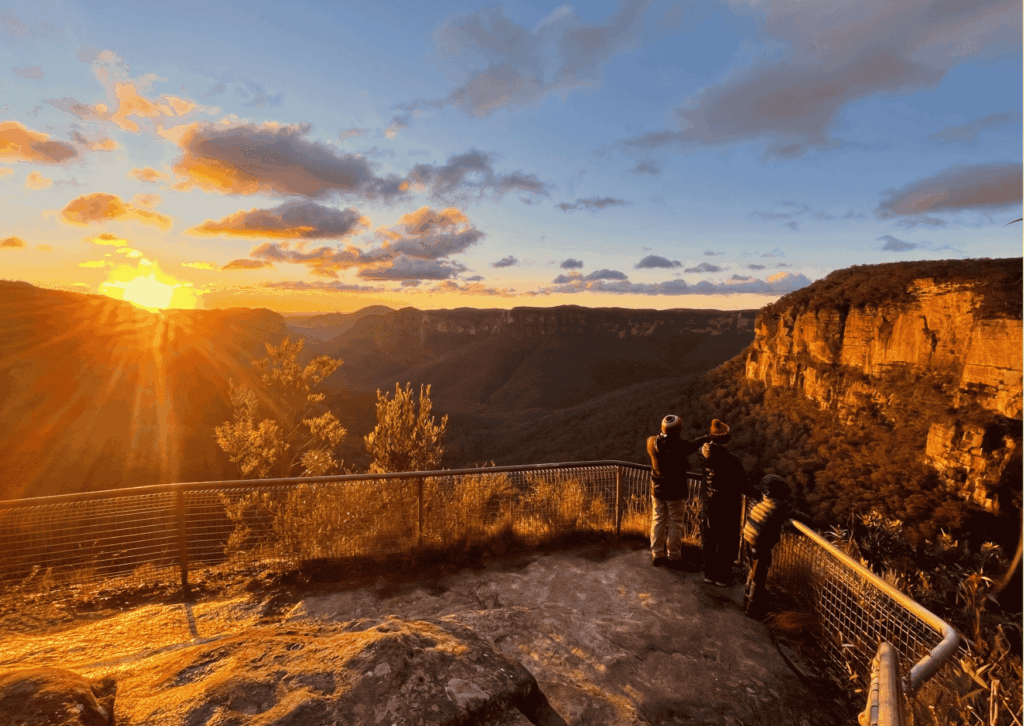
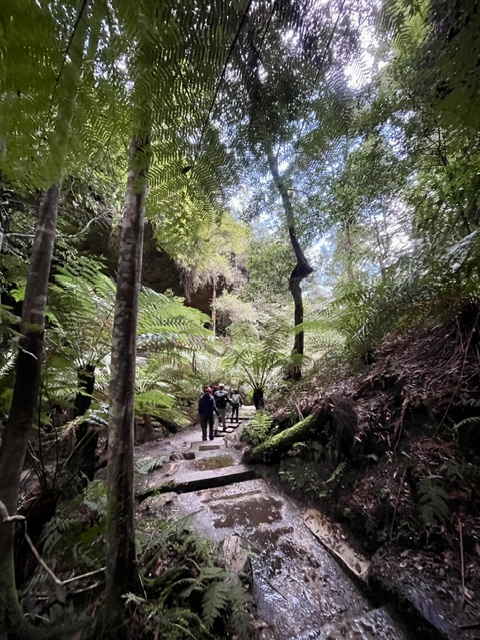
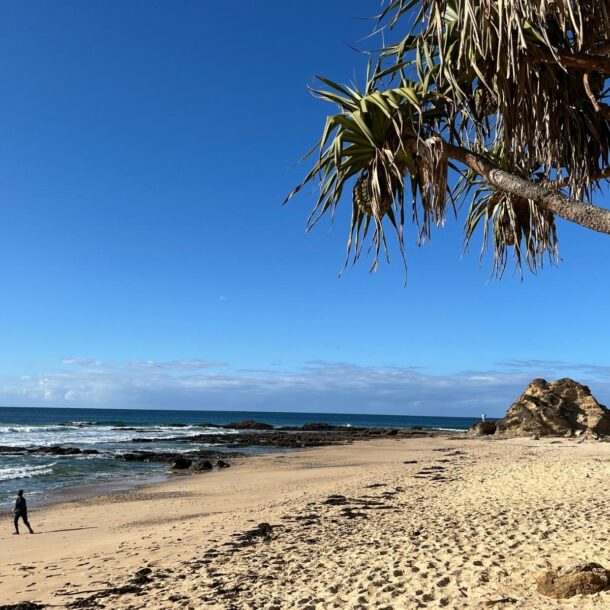
Last week, I filled my camera roll with photos from a winter holiday to the Blue Mountains.
Towering cliffs. Jaw-dropping views. Pristine valleys. Sunrises and sunsets. Quiet trails. Family moments. The kind of landscapes that seem to slow your breathing before you even realise it.
I’d packed my tripod, knowing the Blue Mountains offers beauty, detail and scale everywhere you look. Before long, I found myself seeing potential stories everywhere. Every walk became an opportunity to notice something awe-inspiring and beautiful. I was already imagining the reflections these places might inspire long after the holiday had ended.
On our drive home, however, my phone suddenly stopped working. It inexplicably entered restore mode without warning.
A repair shop couldn’t recover it. Neither could the Apple Store. I eventually bought a new phone, hoping my photos would be waiting in my backup.
They weren’t.
The last backup had happened before we left for our holiday (hard lesson to learn: connect to Wifi on holidays, y’all). Hundreds of photos and videos had vanished. Precious family memories. Ideas for future blog posts. Reels I had already begun imagining.
For a while, it felt as though I’d lost the entire holiday. The feelings of restoration and rejuvenation gave way to grief and loss.
I cried and raged.
For about an hour, I let myself feel the disappointment. I lamented the photos I would never get back, the family memories that now existed only in my mind, and all the ideas I’d been excited to share.
My family, bless them, didn’t try to fix it. They didn’t tell me it wasn’t a big deal or remind me that “they’re only photos.” They simply held space for me. They took turns giving me a hug, saying they were sorry, and then let me have the time I needed to grieve.
Then something unexpected happened
As I began setting up my new phone, I discovered that a few things had survived.
My notes were there. Some audio recordings of lyrebird sounds. One video I’d recorded for a reel had somehow synced. I don’t know why those particular pieces remained while everything else disappeared. Technology doesn’t always offer satisfying explanations.
Another handful of photos had been saved because I’d shared them with family and friends, or I’d taken them on my husband’s phone.
What struck me, though, was that even in the midst of loss, the story wasn’t as simple as everything is gone.
Some things remained.
Looking at the bigger picture – that’s often true in life.
When something precious is taken from us, our attention naturally goes to what we’ve lost. It’s harder to notice what is still quietly present.
As the disappointment settled, I realised something else: what I had really been collecting wasn’t photographs.
It was attention. It was recognition. It was awareness.
The camera had simply recorded where my attention had been.
Every image represented a moment when I had paused long enough to notice the way light settled on a cliffside, the curved angle of stepping stones on a pathway, the quiet strength of old forests, or the warmth of my family spending time together.
Those moments still happened.
The walks. The sunrises. The sunsets. The hot chocolate fondue. Games of hide and seek in a historic National Trust garden. The conversations. The laughter.
None of that disappeared when my phone stopped working. The sense of wonder I experienced wasn’t stored on a phone. It was experienced in real time. It still exists in my memories and my heart.
One video somehow survived the phone failure. Looking at it now, I realise it isn’t valuable because it’s the only footage I have left. It’s valuable because it reminds me of the attention I brought to that moment.
Of course, I wish I still had the photos. Moments can never be recreated in exactly the same way, and it’s okay to feel disappointed about that.
But somewhere in my disappointment was another quiet reminder. Connection Compass has never been about collecting perfect moments. It’s about learning to pay attention to them while they’re here.
The photos were never the destination.
They were simply part of the process of finding joy in the moment.
Photography has energised me for decades. What I’ve always loved isn’t necessarily the finished image (although that can be satisfying). It’s the joy of noticing. The quiet satisfaction of paying attention to the little details and light. The energy of capturing beauty in the moment.
Perhaps that’s true of other things we gather too.
Through life we collect achievements, accolades, keepsakes, messages, and possessions. They matter. They become part of our story.
Yet sometimes life reminds us – through experiences like losing your holiday photos – that what shaped us isn’t always the thing we can hold in our hands.
It’s the person we became while we were gathering it.
Maybe you’ve experienced something similar.
A project you worked hard on but didn’t eventuate. Years of work lost to a hard drive failure. A treasured possession that couldn’t be replaced. A season of life that now exists only in your memory. Or maybe even the loss of someone you love.
When that happens, it’s easy to believe everything has been lost.
But often, something far more important remains.
The skills you developed. The lessons you learnt. The perspective you gained. The love you felt. The relationships that were strengthened. The ability to notice beauty where you once hurried past it.
Those things don’t disappear with a broken phone.
Sometimes we lose what we’ve gathered.
That hurts.
But we don’t lose the person who learned to gather it.
The photos may be gone. But the way I learned to see isn’t.
Reflection
Can you recall a time when you lost photos, files, or something you held dear?
Where did your attention go first?
As you look back now, what remained that you couldn’t lose?
Cherie Pasion
Cherie Pasion is the founder of Connection Compass, a framework that helps people re-orient when life feels off and respond with clarity and steadiness. Her work draws on lived experience, behavioural science, systems thinking, and nature-based practice. Cherie has led award-winning behaviour change programs supporting thousands of people across Australia and is an internationally published author.